About this stamp
A Tragic Turning Point in India’s History
13 April 2019 marked 100 years since the Jallianwala Bagh Massacre, one of the darkest chapters in India’s colonial history. On this fateful day in 1919, more than a thousand innocent men, women, and children were brutally gunned down by Brigadier General Reginald Dyer while attending a peaceful gathering at Jallianwala Bagh in Amritsar, Punjab.
What began as a meeting to voice dissent against the arrest of Mahatma Gandhi, Dr. Saif-ud-Din Kitchlew, and Dr. Satyapal, soon turned into a horrific bloodbath that shocked the world and ignited the fire of India’s freedom struggle.
The Day That Changed Everything
The massacre took place on Baisakhi, Punjab’s joyous harvest festival, a day when families from surrounding districts had come to Amritsar to celebrate. The 6.5-acre Bagh, located near the Golden Temple, had only one narrow exit — a detail that would soon turn fatal.
General Dyer, fearing the gathering of thousands of peaceful protestors, marched in with troops comprising Baluch and Gurkha soldiers. Without warning or provocation, he ordered open fire on the unarmed crowd. The soldiers continued firing until their ammunition was nearly exhausted — 1,650 rounds were fired over a span of ten minutes.
There was no escape. Many perished instantly; others fell into a nearby well or were crushed in the desperate attempt to flee. The narrow exit was blocked, sealing the fate of those trapped inside.
A Night of Unimaginable Suffering
As curfew descended upon the city, hundreds of injured lay unattended, bleeding through the night. Families were forbidden from seeking medical help. The following day, mass burials and cremations were held in grief and silence.
Official British records placed the death toll at less than 400, but eyewitness accounts and independent investigations revealed over a thousand fatalities and thousands more wounded. The real toll, hidden by censorship and fear, remains etched only in collective memory.
The Aftermath: Oppression and Resistance
Following the massacre, Martial Law was declared across Punjab. The colonial regime, under Sir Michael O’Dwyer, unleashed further humiliation — from the notorious “Crawling Order” that forced Indians to crawl through the streets, to harsh press censorship that silenced truth.
Yet, instead of breaking India’s spirit, the brutality strengthened it. Leaders like Mahatma Gandhi and Rabindranath Tagore denounced the massacre, with Tagore returning his knighthood in protest. The tragedy became a turning point, uniting Indians in their resolve for independence.A Century Later: Honouring the Martyrs
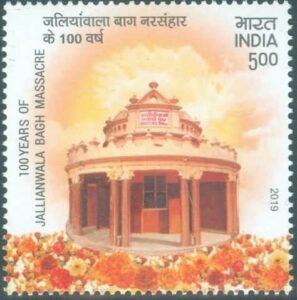
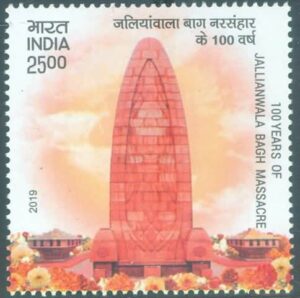
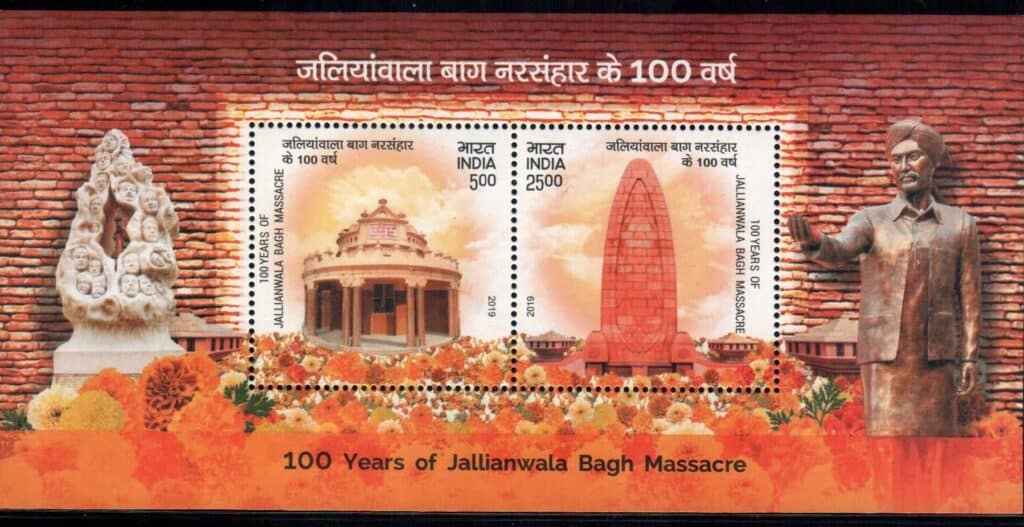
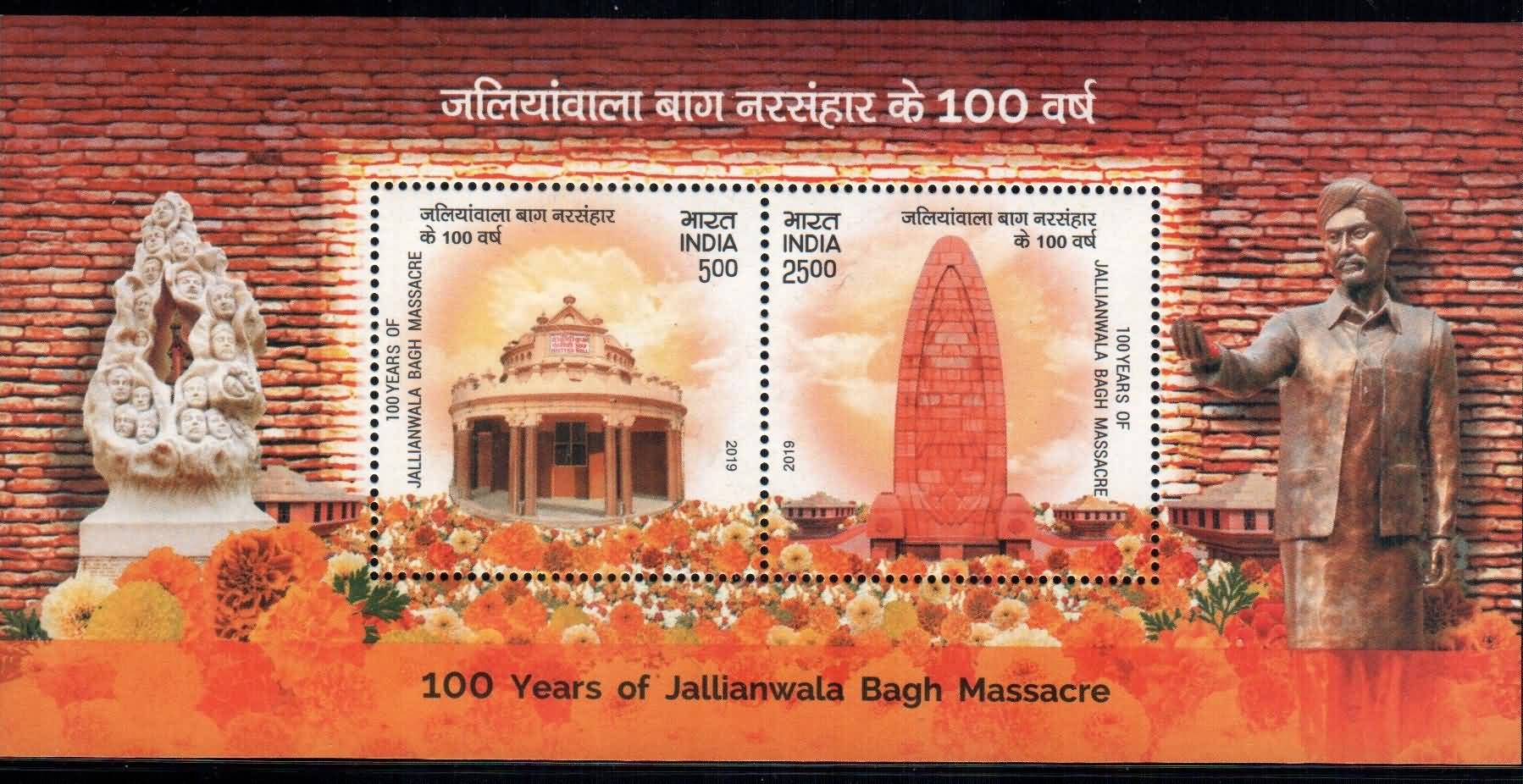
The Jallianwala Bagh Massacre remains a solemn reminder of the price India paid for freedom. A century later, India Post issued a Commemorative Postage Stamp (2019) to pay tribute to the innocent souls who perished on that day and to celebrate the undying resilience of the Indian people.
This stamp stands not just as a philatelic artefact, but as a symbol of remembrance, ensuring that the sacrifice of those who fell at Jallianwala Bagh continues to inspire generations.
A Stamp That Speaks for a Nation
The Jallianwala Bagh Centenary Stamp encapsulates both sorrow and pride — sorrow for the innocent lives lost, and pride in the spirit of unity that the tragedy awakened. It is more than ink on paper; it is a testament to India’s unbroken will for freedom and justice.
For More Information
Read more here: