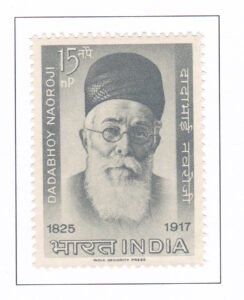

About this stamp
Narayan Malhar Joshi, born on June 5, 1879, in Goregaon, Maharashtra, hailed from a family that originally belonged to Rayari village in Pune district but had migrated to Goregaon. After completing his primary education in Goregaon and secondary education in Pune, Joshi graduated from Deccan College, Pune in 1901. He embarked on a teaching career, serving in schools in Ahmednagar, Bombay, Pune, and Ratnagiri until around 1909.
Driven by his passion for public service, Joshi joined the Servants of India Society in 1909. In 1911, he founded the Social Service League and remained closely involved with its activities until 1955. His interest gradually shifted towards labor issues, and he established numerous welfare centers, night schools, medical centers, and industrial classes in labor areas. Joshi initiated the All India Trade Union Congress in 1921 and served as its Secretary until 1929.
However, disillusioned by the strikes in Bombay in 1928-29, instigated by certain elements within AITUC, Joshi parted ways with the organization and launched the Trade Union Federation. He played a pivotal role in shaping several labor welfare enactments, including amendments to the Factory Act of 1881, the Workmen’s Compensation Act (1924), the Indian Trade Union Act (1926), and the Payment of Wages Act (1938).
Representing Indian labor interests, Joshi attended the first International Labour Conference in Washington in 1919, as per the Government of India’s request. He also served on the Royal Commission on Indian Labour (1929-30) and represented Indian labor at International Labour Organization Conferences between 1922 and 1948.
Joshi’s contributions extended to various roles, including Chairman of the Labour Sub-Committee of the Indian National Planning Commission in 1937, and President of the Railwaymen’s Federation in 1929. A prolific writer and journalist, he managed the Marathi daily “Dnanaprakash” of the Servants of India Society and started the Marathi weekly “Kamgar Samachar” in 1921.
Narayan Malhar Joshi passed away on May 30, 1955. The Indian Posts and Telegraphs Department honors his legacy as the father of the Trade Union movement in India by issuing a special postage stamp in his memory.