
About this stamp
Indian Hand Fans – A Timeless Craft of Elegance and Tradition
Origins of Hand Fans
The origin of hand fans dates back nearly 5,000 years to ancient Egypt, where they were considered sacred instruments used in religious ceremonies. Fans symbolized power and divinity, often carried by priests and royalty. Other civilizations such as the Hebrews, Persians, Greeks, and Romans also used hand fans in various forms.
The folding hand fan is believed to have been invented in either Japan or China. Japanese legends suggest it was inspired by the folding wings of a bat, while the Chinese trace its origin to a woman who began fanning her face at a festival, inspiring others to create similar tools. The fan eventually made its way to Europe in the 1500s through trade routes, where it became a fashionable symbol of wealth and refinement.
The Legacy of Indian Hand Fans
In India, hand fans—locally known as Pankha or Hath Pankha—have a rich cultural and historical presence. References to fans appear even in the Mahabharata, illustrating their ancient use in temples, royal courts, and noble households. Temple fans ranged from small, delicate ones to large ceremonial pieces that required strength to move.
Each region of India developed its own distinct style of hand fans, crafted from local materials and adorned with intricate designs. These fans are not only practical tools but also works of art that reflect India’s craftsmanship and cultural diversity. Even today, traditional fan-making is largely carried out by women artisans across rural India, keeping this centuries-old craft alive.
Varieties of Traditional Indian Hand Fans
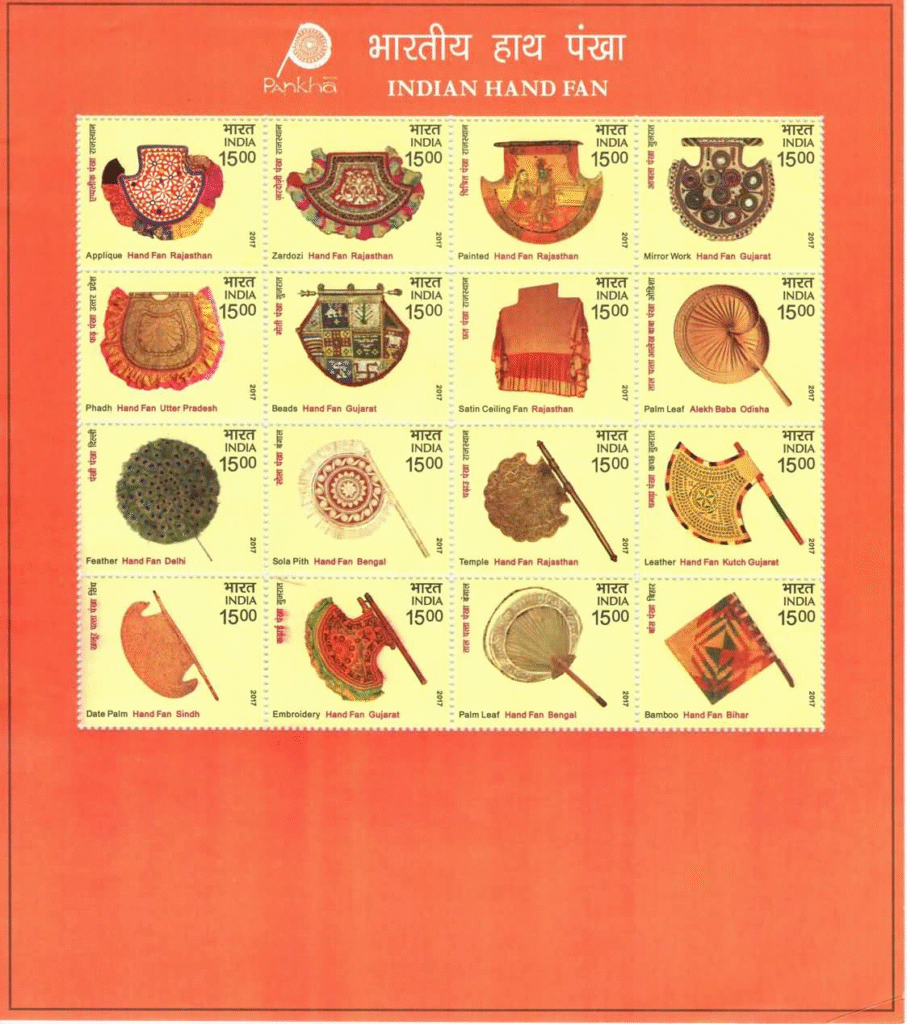
The Department of Posts, India, released a special series of 16 commemorative postage stamps celebrating the exquisite artistry of Indian hand fans from different states:
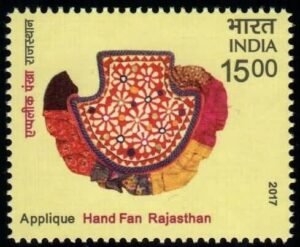
- Appliqué Hand Fan (Rajasthan): Made using ornamental needlework with colorful frills, showcasing Rajasthan’s vibrant appliqué tradition.
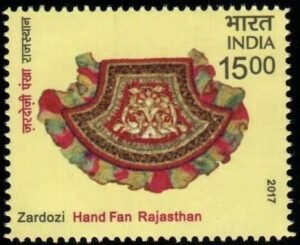
- Zardozi Hand Fan (Rajasthan): Embellished with intricate gold threadwork, these antique fans reflect royal grandeur.
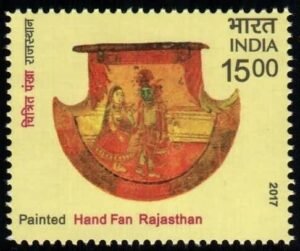
- Painted Hand Fan (Rajasthan): Decorated with hand-painted images, often used in Krishna temples.
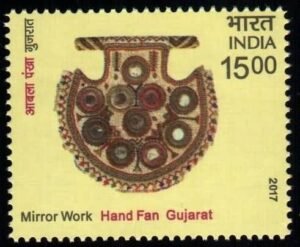
- Mirror Work Hand Fan (Gujarat): Adorned with mirrors and beads, these cotton fans are traditional yet decorative.
- Phadh Hand Fan (Uttar Pradesh): Crafted with silk and zari, once used by royalty and nobles.
- Beads Hand Fan (Gujarat): Covered with colorful beads, featuring a unique swivel handle.
- Satin Ceiling Fan (Rajasthan): A hand-pulled ceiling fan used in royal palaces, operated by Pankhawalas.
- Palm Leaf Fan (Odisha): A large, natural fan made from palm leaves, simple yet elegant.
- Feather Hand Fan (Delhi): Made from peacock feathers, symbolizing beauty and grace.
- Sola Pith Hand Fan (West Bengal): Crafted from milky-white sponge-wood used in traditional Bengali rituals.
- Temple Hand Fan (Rajasthan): Brass fans with long handles offered to temple deities.
- Leather Hand Fan (Kutch, Gujarat): Handmade from stitched and decorated leather.
- Date Palm Hand Fan (Sindh): Woven from soft palm leaves, used across western India.
- Embroidery Hand Fan (Gujarat): Decorated with mirror work and embroidery by women artisans.
- Palm Leaf Hand Fan (West Bengal): Known as Tal-Patri Pankha, light and portable household fans.
- Bamboo Hand Fan (Bihar): Brightly colored and sturdy, made from finely woven bamboo.
Cultural and Artistic Significance
Indian hand fans are not merely cooling devices—they are symbols of heritage, craftsmanship, and creativity. From temples to royal courts and humble homes, they represent India’s artistic expression and regional identity. These fans continue to tell stories of India’s past, offering a glimpse into its rich artistic legacy that flows gracefully through time.
Miniature Sheet on Indian Hand Fans
To celebrate this extraordinary heritage, the Department of Posts has issued a set of 16 Commemorative Postage Stamps along with a beautifully designed Miniature Sheet on the theme “Indian Hand Fans.”
The Miniature Sheet brings together these diverse fans, showcasing India’s rich craftsmanship, regional diversity, and the enduring relevance of traditional cooling devices in everyday life.
For More Information
Read more here: