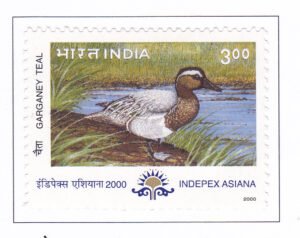
About this stamp
Commemorative Stamp: White Winged Wood Duck
The White Winged Wood Duck, scientifically known as Asarcornis scutulata, is a majestic and endangered species native to the dense tropical evergreen forests of South-East Asia. This commemorative stamp celebrates its unique characteristics and underscores the urgent need for conservation efforts to protect its habitat.
Physical Characteristics
- Appearance: The White Winged Wood Duck is distinguished by its large size, with a black body adorned with white patches on the wings, a white head speckled with black, and striking red or orange eyes. The male is larger and more glossy than the female.
- Size: On average, these ducks measure about 81 cm in length.
Habitat and Behavior
- Natural Habitat: This duck is primarily found in inaccessible swampy areas within dense tropical evergreen forests. It prefers secluded jungle pools and avoids human disturbances.
- Behavior: The White Winged Wood Duck is known for its ghostly and distinctive voice, earning it the Assamese name ‘Deo Hans’ or Spirit Duck. It is active during the night, feeding on a diet that includes aquatic plants, insects, crustaceans, mollusks, frogs, snakes, and fish.
Conservation Status
- Threatened Species: Declared one of the most threatened species of ducks in North-Eastern India in 1952, the White Winged Wood Duck faces significant challenges due to habitat destruction caused by human activities.
- Conservation Efforts: Efforts to protect this species focus on preserving its dense, undisturbed primary rainforest habitat in South-East Asia. Conservation measures include habitat restoration, protection from poaching, and raising awareness about the species’ plight.
Conclusion
Issued by the Department of Posts, this commemorative stamp serves as a poignant reminder of the importance of protecting endangered species like the White Winged Wood Duck. By highlighting its unique features and conservation needs, the stamp encourages global efforts to safeguard biodiversity and preserve natural habitats for future generations.
This stamp not only celebrates the beauty and significance of the White Winged Wood Duck but also calls attention to the critical need for conservation actions to ensure its survival in the wild.