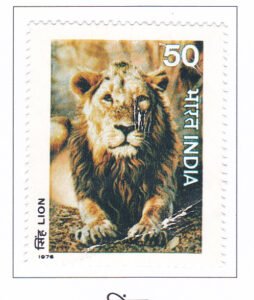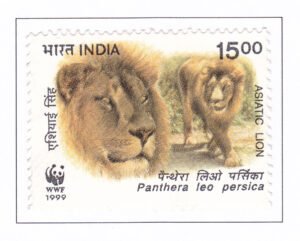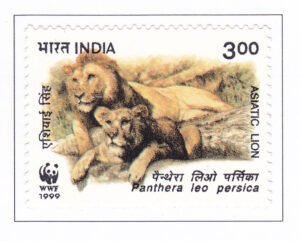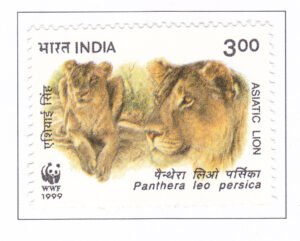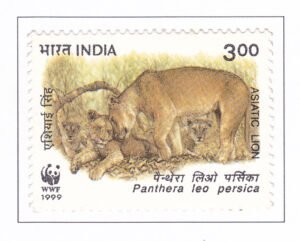

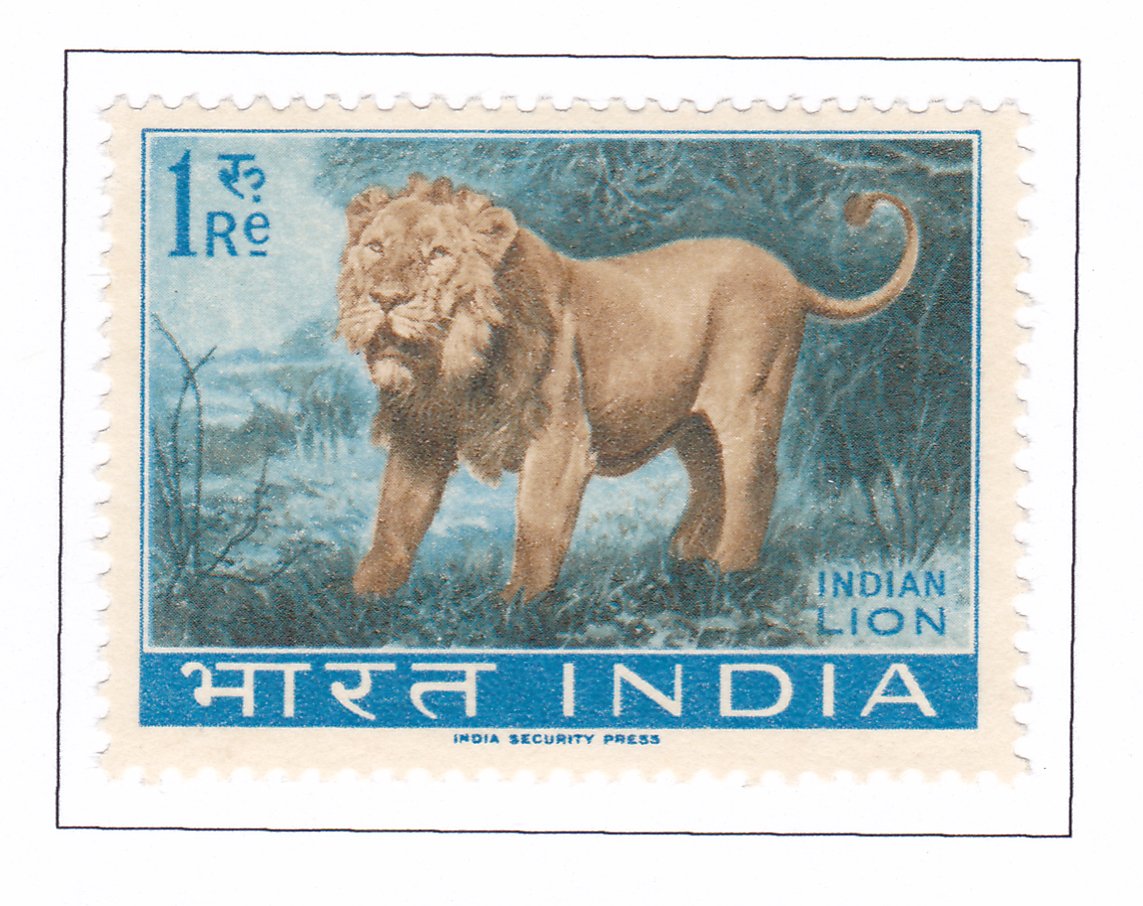
About this stamp
The Asiatic or Indian Lion (Panthera leo persica) once roamed across Persia, Iraq, and large parts of northeast and north India. However, due to habitat loss and hunting, their range has significantly reduced, and they now survive only in Gujarat State, thanks in part to the efforts of the former rulers of the princely state of Junagarh.
At the turn of the 20th century, there were only around 100 lions left in the Gir Forest. However, conservation efforts have led to a modest increase in their population, with a census in 1955 estimating their numbers at around 290. Presently, there are approximately 280 lions in the Gir Forest.
The Indian lion shares many similarities with its African counterpart but also exhibits some distinct differences. For instance, young Indian lions have fewer spots visible, and they tend to have larger tail tassels. While male Indian lions typically have manes, African lions may sometimes be maneless. Additionally, African lions generally have slightly larger manes, possibly due to differences in habitat and elevation.
The Indian lion’s habitat in Gujarat has significantly dwindled from 2,000 square miles to approximately 500 square miles within the Gir Forest. Efforts are underway to establish a sanctuary or national park to protect this majestic species.
Given its significance and cultural importance, the Indian lion serves as the national emblem of India, symbolizing the nation’s strength and magnificence.