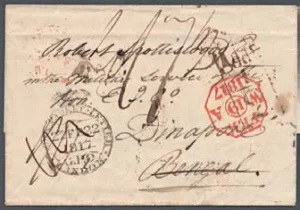
British India Before Stamps: Letters, Charges and Postal Marks
How letters travelled and postage was accounted for in India before 1854, and how to read the marks and sums on a letter without a stamp.
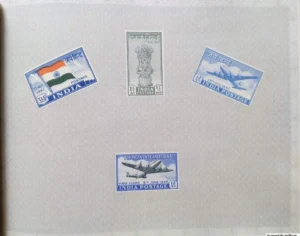
From the 1852 Scinde Dawk to the transport designs of George VI: the stamps and postal machinery that linked the Indian subcontinent.
The post before stamps, the Scinde Dawk of 1852, the lithographed and typographed stamps of 1854, essays and proofs, the first De La Rue stamps and the change from Company to Crown.
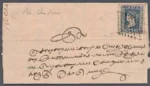
How letters travelled and postage was accounted for in India before 1854, and how to read the marks and sums on a letter without a stamp.
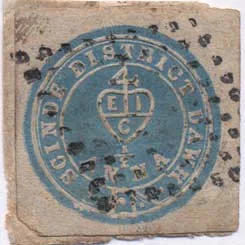
A half-anna provincial experiment in Sindh: three fragile forms, red, white and blue, the argument over who made them, their postmarks, forgeries and the recall that was not carried out.
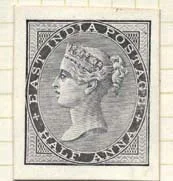
How the everyday half-anna letter stamp of 1854 was lithographed in Calcutta, from a copper die through transfers to stones of ninety-six, and what its dies, margins and covers tell a collector.
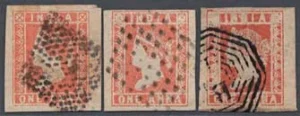
The lithographed one-anna red of 1854: its three dies, the substituted transfers on its stones, and how Sir Eric Studd rebuilt a block of four from two pairs cut from a cover.
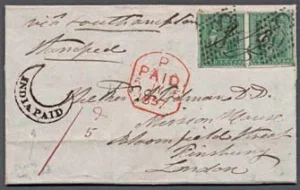
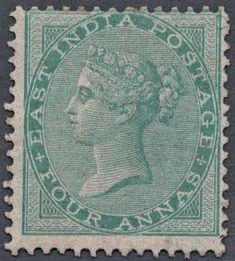
The two annas green was the one stamp of 1854 printed by typography, not lithography: its dies, frame lines, paper and a pair on a letter to London.
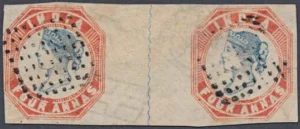
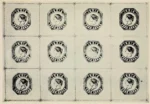
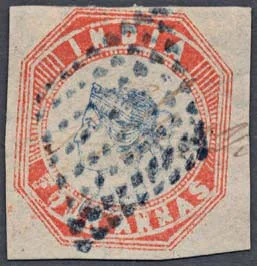
India’s first two-colour stamp: a blue head printed into a red frame, its head and frame dies, its settings of twelve and twenty-four, and the errors that separate printing made possible.
How repeated flaws, multiples and sheet margins link a single stamp of 1854 to the stone it was printed from, and how to build a reconstruction others can check.
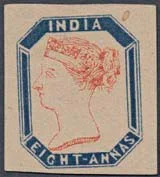
The designs that came before India’s first stamps, from a pencil sketch of 1852 and the lion and palm tree to an eight-anna stamp never issued, and the later impressions that can be mistaken for them.
London typography replaced the Calcutta stamps: the contract of 1854, the papers, the green two annas that may never have been issued, and how to build a study of the first De La Rue stamps.
The end of East India Company rule in 1858 did not change the stamps at once: EAST INDIA POSTAGE stayed in use until 1882, while the post’s laws, accounts, official mail and rates changed on their own timetable.
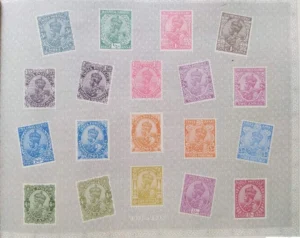
The stamps of Edward VII, 1902–1911, including the POSTAGE & REVENUE stamps and the high values of 1909.
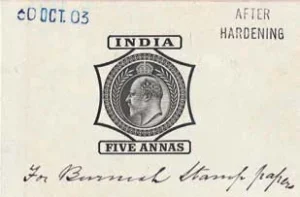
Edward VII’s portrait went into a familiar system of values and colours, followed by a surcharge, dual-purpose low values and new high values.
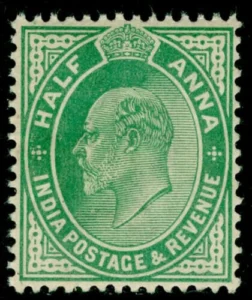
In 1906 the half-anna and one-anna stamps were redesigned with INDIA POSTAGE & REVENUE, so that one stamp could pay postage or a receipt.
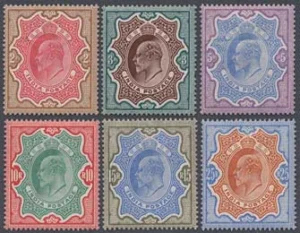
The Edwardian rupee stamps, and the ten, fifteen and twenty-five rupees added in 1909 when telegrams came to be paid with postage stamps.
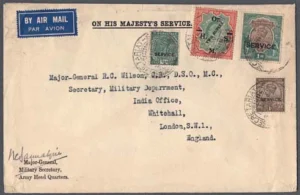
On H.M.S. carried on under the new King, on the redesigned low values and the large rupee stamps, and old Edwardian stock was later revalued for official use.
How to tell an Edward VII shade from a design change, a surcharge from an overprint, and a printer’s CANCELLED from a postmark.
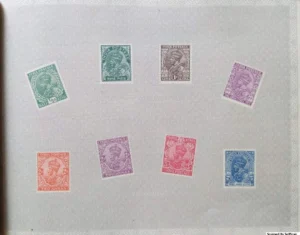
George V’s definitives from London and Nasik, the first air mail stamps, the New Delhi set and the Silver Jubilee.
The imperial portrait, the low values of 1911–1912 and the designs that stayed in service across a change of printer.
How the London designs became Nasik stamps: multiple-star paper, new sheet layouts, changes of inscription and why a cancellation cannot date a printing.
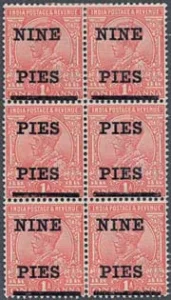
New values for new postage rates, nine pies printed two ways, and the return from POSTAGE & REVENUE to postage-only inscriptions.
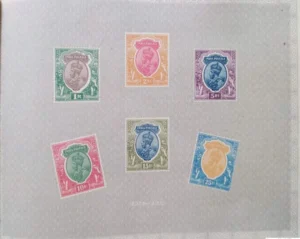
Elephant supporters, six two-colour rupee values from 1913, and the difference between an impressive high value and evidence of postal use.
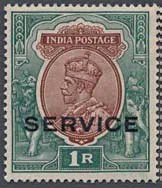
The return of the SERVICE overprint in 1911–1912, the London stamps underneath, and the postal evidence that separates government mail from ordinary letters.
Nasik paper, revised stamps under the SERVICE overprint, the 10-rupee ceiling, and official stamps still being reported after George V’s death.
NINE PIES, the quarter-anna fraction and the reduction of official high values in 1925: why the same portrait can carry quite different values.
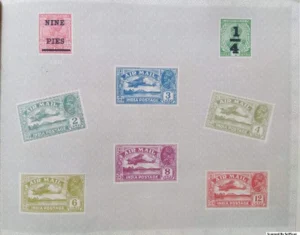
Six aircraft stamps, three changing postal notices, and the difference between an air mail stamp, an air mail label and proof that a letter flew.
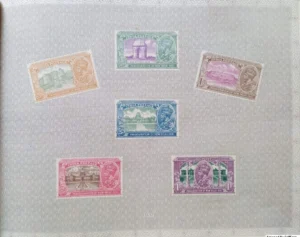
India’s first pictorial commemorative series: the Old Fort, the new government buildings and a portrait framed by the Dominion Columns.
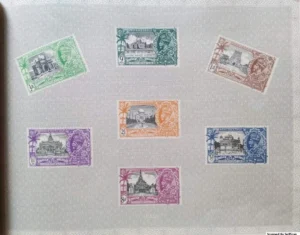
Seven monuments of India and Burma, a value changed before issue, and the difference between the Jubilee stamps and the Jubilee charity seals.
From changed inscriptions to the 3 RS flaw: how to tell design changes, printing faults, trial material and damage apart on George V stamps.
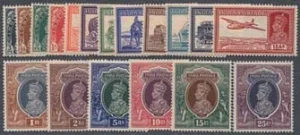
George VI’s definitives, the wartime small stamps and the Victory issue, the last stamps of British India.
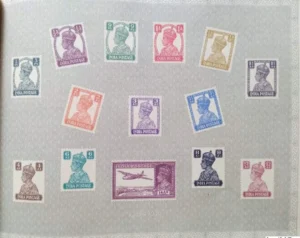
Small portrait values, eight pictures of the ways mail was carried, and the elephant high values: three formats in one new reign.
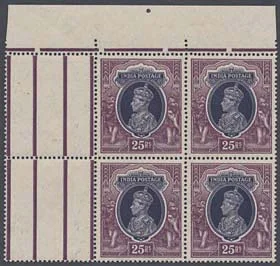
Six two-colour rupee values with the new portrait in the elephant design, and the small missing-pearl faults found under several countries’ overprints.
From black SERVICE overprints on the ordinary definitives to small stamps with SERVICE printed in their own lower panel, and their later life in Pakistan.
Saving paper removed the large transport pictures, pigment shortages shaped the colours, and a fourteen-anna aircraft stayed large as the exception.
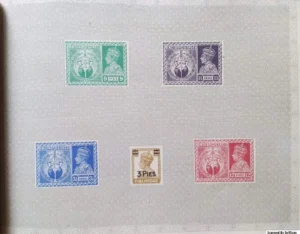
Four values marking the Allied victory, a design of globe and sword, and the private first-day covers that show how the issue was received.
The three pies on 1 anna 3 pies of 1946, its known letter faults, and the older official stock that carried on into George VI’s reign.
Independence and partition divided the post: George VI stamps used in two new countries, Pakistan’s Nasik overprints, and the dates of India’s first national stamps.
The Elephant’s Head watermark, the INDIA POSTAGE designs, the later portrait and rupee values, surcharges, SERVICE and On H.M.S. official stamps and the printings of Victoria’s reign.
A watermark that ties together several designs and new values: how the Elephant’s Head paper came in value by value, the changed dies of the four and eight annas, and the six annas eight pies.
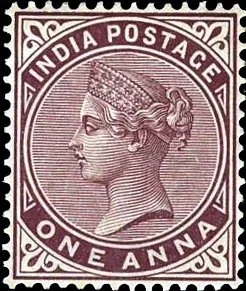
Portrait, diadem and frame must be read together: how the Queen’s head was redrawn on Indian stamps, and how the later portrait came in for some values only, from 1873 to 1899.
Larger designs, a shorter inscription and paper watermarked with a star: how the INDIA POSTAGE series was approved, printed and sent out value by value, and how to tell its frames apart.
Annas, pies and the colour changes of 1899–1900: the working stamps of late Victorian India, how to read their values and what two covers show about using them.
From the slate rupee of 1874 to the large two-coloured two, three and five rupees of 1895: how to tell the rupees apart, what a high value on a cover proves, and the printers’ ink recipes that are not stamps.
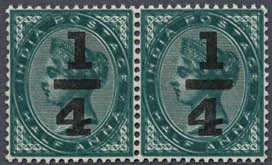
Three different remedies for a missing value: a revenue stamp turned into postage in 1866, two and a half annas on four annas six pies in 1891, and a quarter anna on half an anna in 1898.
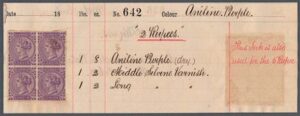
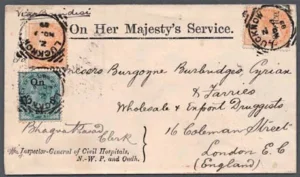
How official stamps turned the government’s postage into accountable stamp use: the SERVICE overprints of 1866, the revenue-stamp provisionals, On H.M.S. from 1874, and what the London printers said they never made.
Paper, die, ink and perforation are separate observations: how to identify a Victorian De La Rue stamp, what the registered plate dates show, and how to tell imperforates, shifted perforations and double prints.
How British India’s stamps were made, the postmarks and the routes the mail took, rates and services, and how to collect and read the stamps and covers.
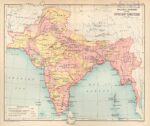
From the Scinde Dawk of 1852 to the transport designs of George VI: the stamps, rates, registration, railway and sea post, stationery and official mail of British India, and how its post met the princely states.